The reintroduction of flexibility, and the launch of a new assessment and allocation tool for disability supports arrived with much fanfare at the beginning of April. After a two year pause on flexible funding, many Individualised Funding users were looking forward to finding out the details of what flexibility would mean. Personally, I was feeling less worried about flexibility and more concerned about how the new needs assessment and allocation tool would work for families providing intensive support using Individualised Funding. The Support Package Allocation (SPA) tool that was being replaced definitely needed updating – but I doubted that Disability Support Services (DSS) would create an assessment and allocation tool that met the needs of those with high and complex needs who live with their families in community.
Before I dig deep into why I feel this way I must explain that there are multiple interpretations of what we mean by complex needs. I will use the definition from Complex Care Group:
- Is disabled and has autism spectrum disorder or behaviour that requires a high level of support
- The person has multiple disabilities, i.e. is physically disabled and has an intellectual disability
- Is disabled and has a serious ongoing medical condition, e.g. epilepsy
Typically, in these scenarios the disabled person will most likely have intensive support needs that require 24/7 care over their lifetime. Their needs may require support via multiple agencies including: disability, health, mental health, education and social support. The issue with complex needs, is just that, they are complex and it is difficult to provide an exhaustive description of every possible unique type of complex disability. High and Complex Needs can also used as a categorisation for disabled people, with wider social or justice related needs, sometimes living under Oranga Tamariki (OT) or within full state care. I am writing here, about our experience in this community and hope that by doing this, it creates more understanding of what we mean by complex needs in order to build systems and support to meet the needs of families in similar situations.
Our Story using Individualised Funding
In our case, our son has a rare disorder called Pentalogy of Cantrell (this is a long-term chronic condition and gives him a physical disability), an Intellectual disability and Autism Spectrum Disorder (non-verbal, Level 3). It is not one ‘diagnosis’ on it’s own that creates his needs, but a tangled web created by multiple and ongoing needs which require supports from a multitude of agencies. His care needs extend well beyond normal family/parenting functions. This complexity, has always been difficult to measure for support in the community – for the first 2 years of his life, spent in Starship Hospital, largely in PICU, he received 24/7 1:1 nursing care, with a multi-disciplinary team that included: Respiratory, ENT and Surgical Doctors, Physiotherapists, Occupational Therapists, Speech Language Therapists, Dieticians, nursing care and a myriad of other medical and allied health professionals. When he came home, 20 years ago – our family became the co-ordinator of those supports, delivered at home in the community and provided through support accessed via Taikura Trust (disability) and Family Options (health). After his discharge, we remained frequent flyers at Starship, due to admissions for respiratory infections, ENT and tracheostomy check ups and surgical interventions. Below, is a tiny snapshot of some of those hospital stays and visits.
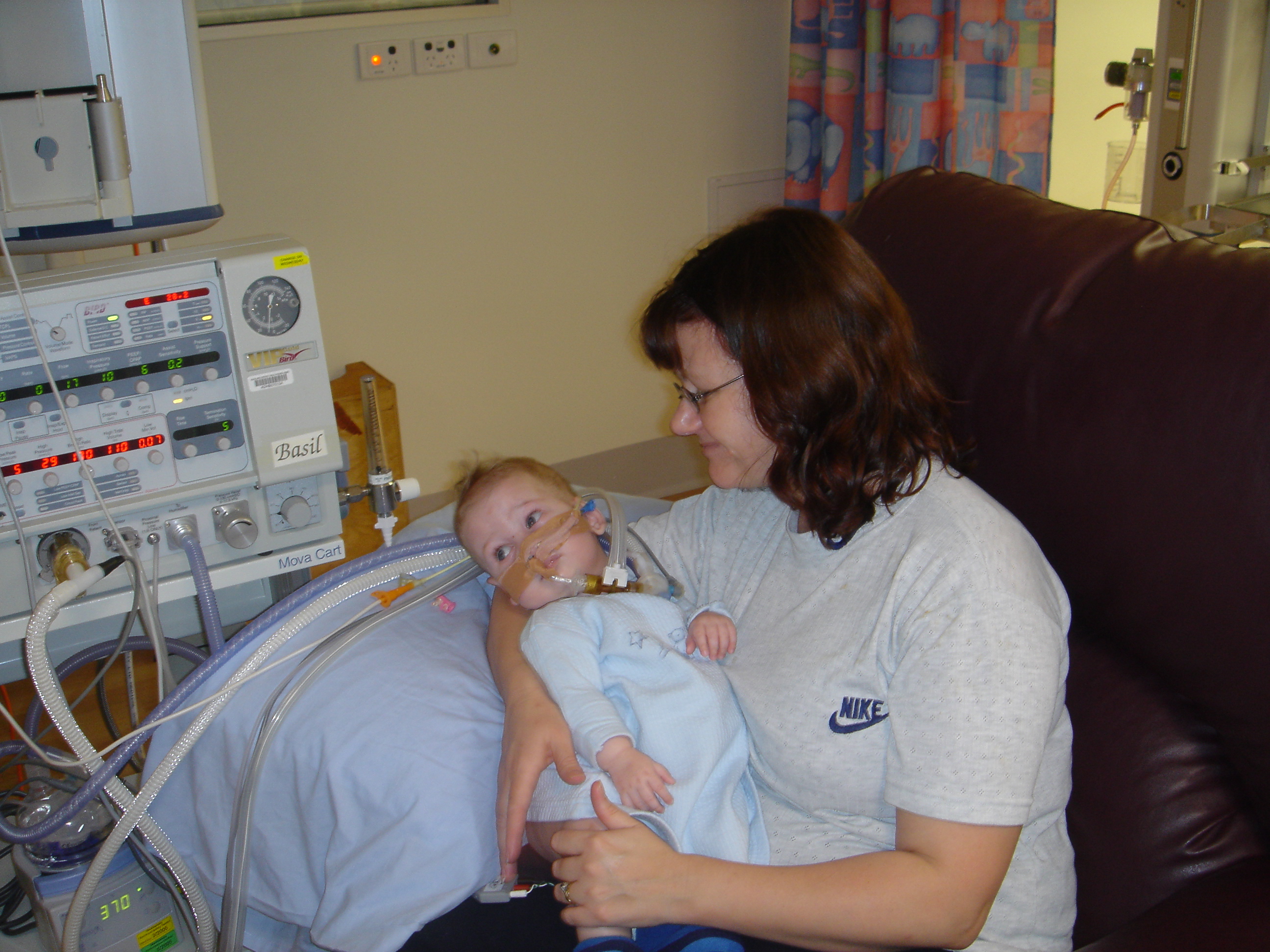
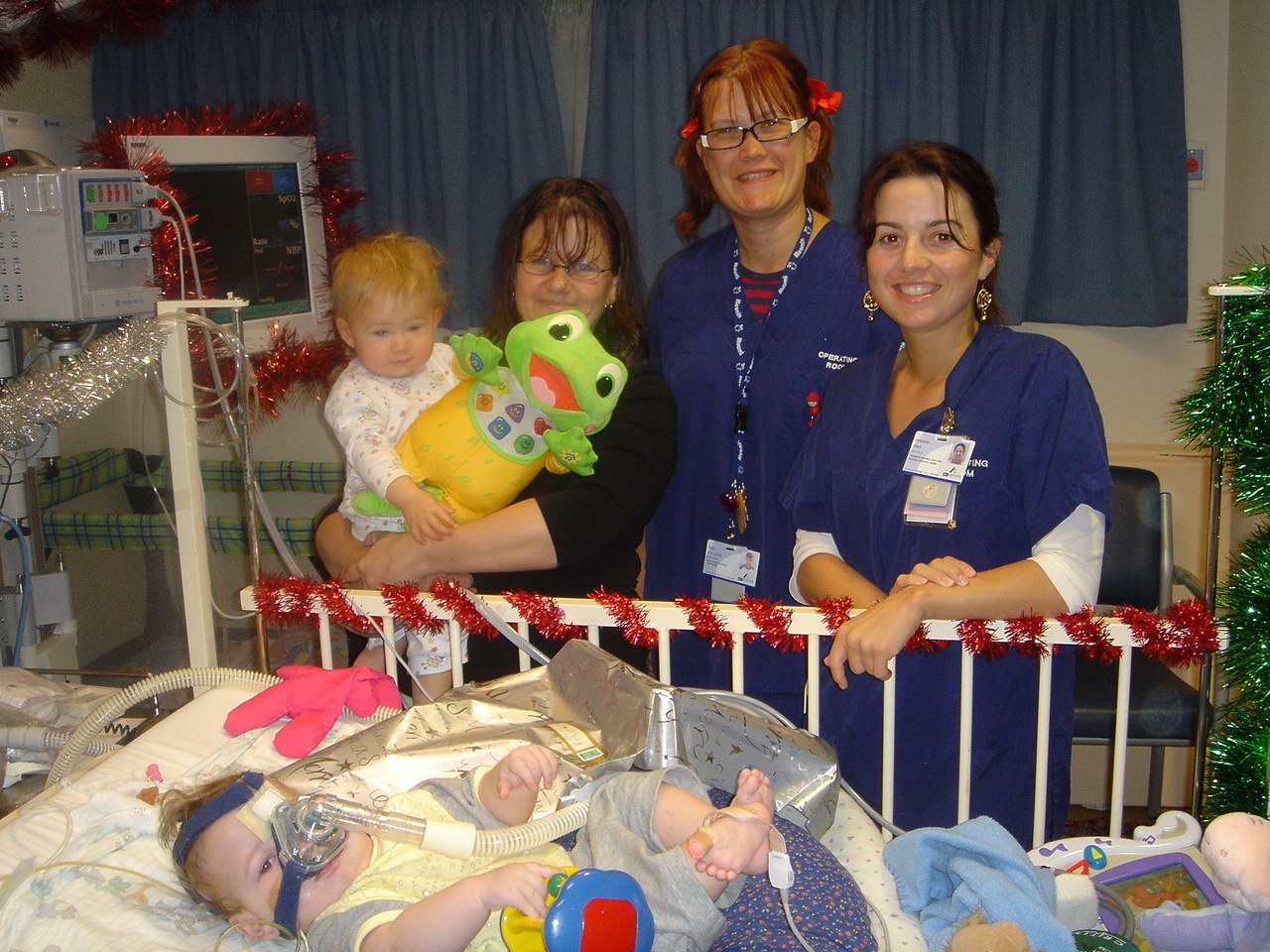
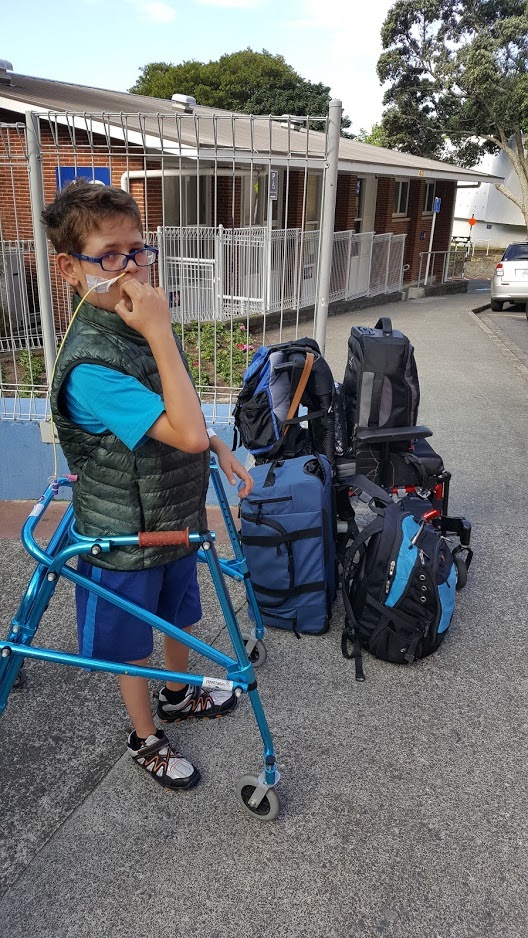


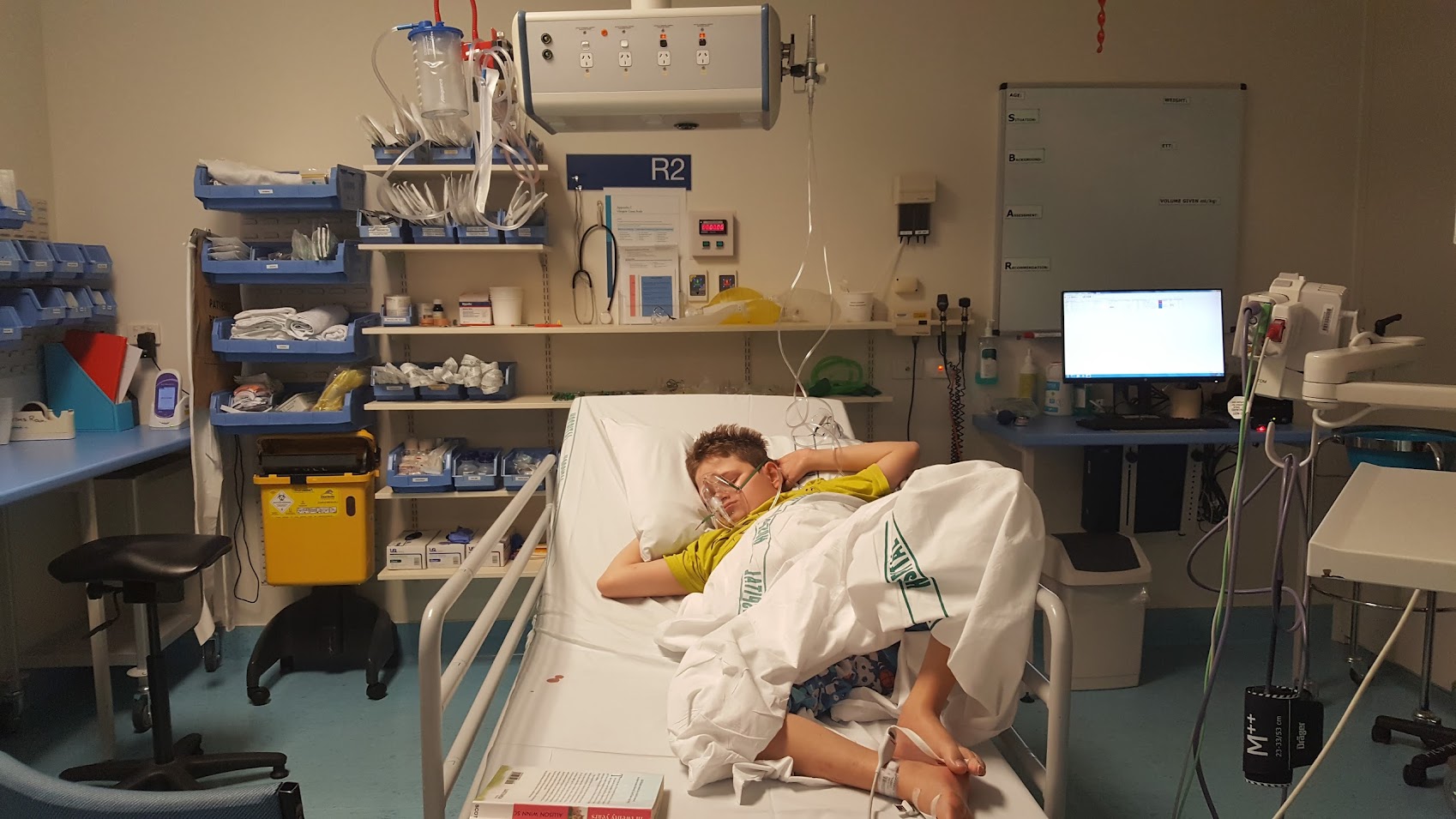

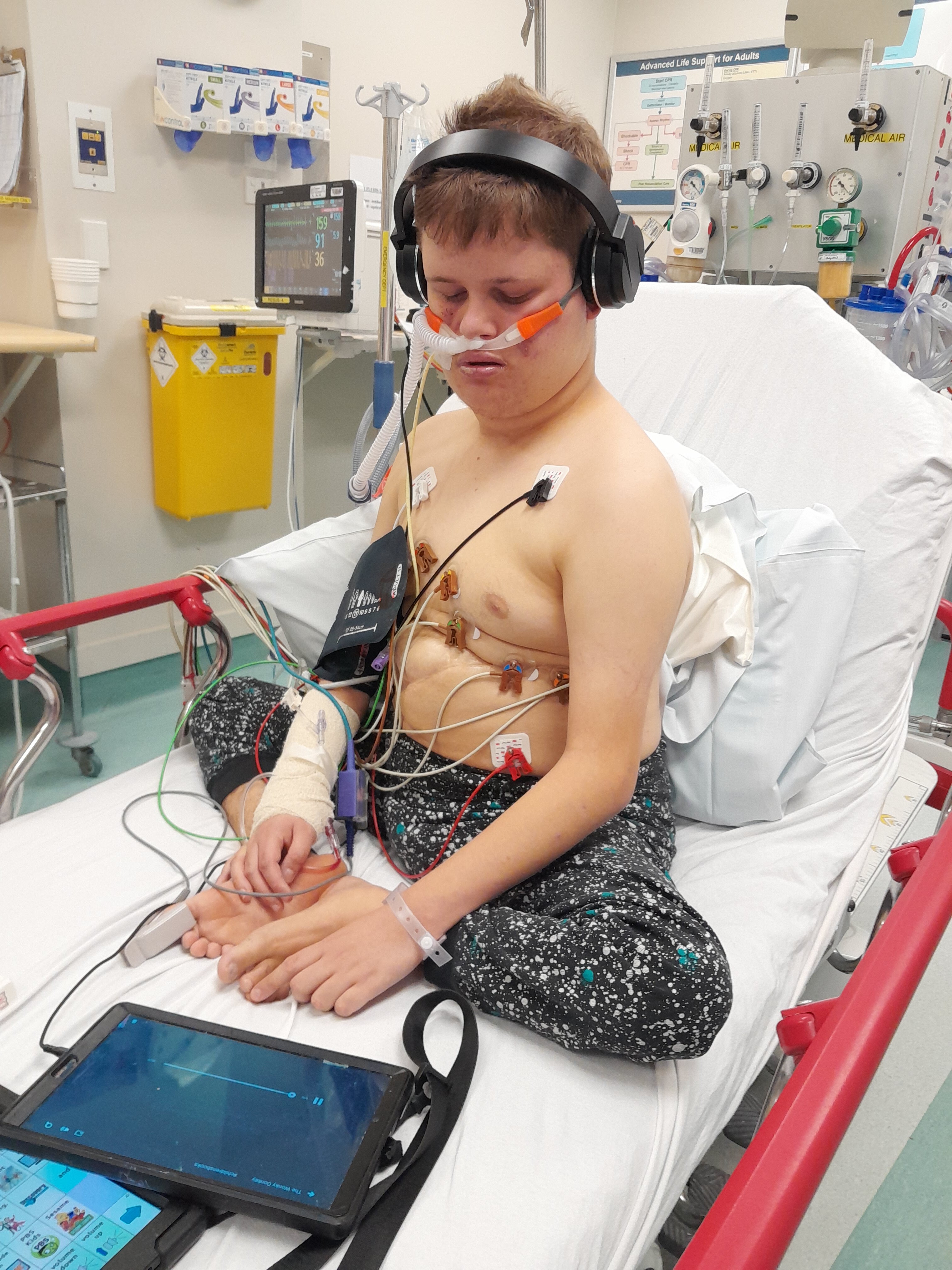
We had to work (and fight) hard to get Mitchell out of hospital back then. Mitchell too, had to work and fight hard for his life. If Mitchell had been born 10 years earlier, he most likely would not have come home – new medical innovation means many people who may have stayed in hospital for life or died young instead now live in the community. In the past, many people with complex disability would have been placed in an institution. Since deinstitutionalisation people with complex disability are often cared for at home by family, without the same support provided in either hospital or an institution. We know that being home with family should be a safer place to be and provide access to an ordinary life. It is better for the disabled person, and should be better for everyone.
When Mitchell came home to live in 2006, and for the next 10 years, he breathed via a tracheostomy and had overnight breathing support access on Bipap and with oxygen support. This alone requires 24/7 support for safety. It was not common for someone with such complex needs to live in the community. Plus community support did not include fulltime nursing care at home. Initially we went home with overnight carers (quickly trained to suction and to monitor oxygen levels) and a small amount of carer support. Phil and I became his medical experts and one of us always needed to be present for emergency trache care. We had brief nursing visits from community as check-ins and as a way to source supplies needed. Back then, I had never considered Mitchell a disabled person. Rather, he had a rare complex disorder and was medically fragile, and our job as parents was simply to love him and keep him breathing. Everything else was secondary. I certainly was not thinking about my own human rights as a Mum/carer back then. I do now.
Like other parents navigating complex needs, I started this journey without a handbook of what to do, where to go or how to care for a complex child. I soon discovered that Mitchell’s needs would always be in the too hard basket when it comes to funding of support at home. Getting out of hospital was one step, keeping ongoing support a totally different scenario. As he had both health and disability needs, we would always have to negotiate which part of the care belonged to a health need or a disability need and which agency would pay for the supports or equipment needed. Instead of having to do one needs assessment annually, we completed two, and then the negotiation would begin around who would pay for what. This was for both support hours and consumables.
It has always felt like we needed to cut our son in pieces and assign his organs, his behaviours, his functions and his needs and equipment into different cost centres to satisfy the system.
When Mitchell started school back in 2009, we added yet another funder to the mix – Education also needed to section off their piece of the pie – any support between the hours of 9-2.30 pm in term time became their responsibility. Of course, when you have a disabled or chronically ill child, the likelihood of them having a 100% attendance rate is laughable. Between sickness, appointments and behaviours, any family in this situation will recognise that school attendance is a haphazard affair. So while you are allocated support hours at school, when your child doesn’t attend, those hours don’t come back to the family but stay in the school budget.
In 2013 our family transferred to using Individualised Funding (IF). Up until then we had support from using both an agency (for disability) and private via Carer Support and Family Options (health). It was not a choice to use it, but rather the only option our family could take if we wanted to continue to receive supports at home. For disabled people, able to manage their own funding IF was a huge breakthrough in terms of choice and control about how you could use the funding and most importantly choosing your own support workers or other supports. I was sceptical about how much work would be involved for me as Mitchell’s agent and how Mitchell could be considered a Manager of the funding – both in terms of his age and his capacity. It was explained I would become his agent and then I would be employing our team directly. Managing an IF budget and directly employing support workers on top of providing intensive support and care was attractive on one hand – I could control who worked in our home, but unattractive on the other – finding and employing staff comes with huge responsibility and is definitely one more administrative burden that is not part of regular parenting.
That was our family’s introduction to Individualised funding. I am grateful that we have the option of Individualised Funding as it provides many benefits. However, managing IF for a complex needs person is not a small job. It involves recruiting and employing a team of staff, managing timesheets and payroll, training people and making sure that you do this correctly. For a complex person who needs full-time support, this means multiple support workers and often multiple funding streams to be managed. Mitchell is now 22 years of age, and he receives multiple strands of support: Disability Supports (Personal Cares, Household Management and Respite), Chronic Health Conditons – Long Term Supports (CHC-LTS) via Health NZ/DHB for overnight support and MSD support Very High Needs (VHN) for community participation. All of these have different regulations on how they can be spent.
What does this mean in practical terms? As his agent, if a support worker worked 12 hours in one day we could theoretically complete a timesheet with 3 hours to personal cares, 2 hours to respite, 3 hours to VHN and 4 hours to DHB. I often wonder who ever really looks at this information that I have to diligently collate to pass the trust test? Sometimes, I think I have to act like a lawyer coding every minute of the day to which part of the work I am doing.
Just recently, I was sent a form to report on how we had used our VHN funding this year – it asked me to complete how we used the funding between support work hours, community provider hours and community hours. This would entail me tracking back through 26 fortnights of timesheets to gather the data. Yet, we have given our host this information in terms of hours of support workers paid versus organisations, (the host is paid to perform a function of managing and controlling the spend) – so why do I (the parent agent) now have to duplicate this information for MSD? I know that at anytime we can be audited. I know that the system requires transparency so I keep records and the support workers record every outing, every medication given, feeding, hygiene activities, sleep times, wake times, every bowel motion, types of aggression, when they hang washing, change the bed, receipts for entry fees and photo evidence of community participation. I have large boxes of exercise books filled with notes and a gallery of photos on what Mitchell is doing.
Balancing the rules and regulations of these flexible funding streams is hard – for both disabled people managing their funding and families. In the years we have used IF, there have been shifts in guidelines and it’s hard to keep up. There have been multiple shifts and changes on the rules around payment to family carers – how much per hour, how many hours maximum, which family carers (never spouse), and whether the person you supported had very high or high needs. Changes, again not widely communicated to families. Changes for flexibility introduced during the Covid Pandemic, and then stripped back in March 2024, and now reinstated (with different criteria). It’s more than disabled people and families can cope with.
It is worth pointing out that when the Government moved disabled people like Mitchell into individualised funding they made a substantial saving by not paying the agencies fees/commissions. For us, on an overnight shift, this could be approximately a $100 per shift. If we had 5 overnight shifts, this would mean an agency collected $500 per week to manage the support workers. A family agent is able to claim $300 per annum as a recogniton payment for one year – the recognition payment is meant to cover our administration time. Lets compare the difference – an agency would have received $500 per week, I would receive $5.77 per week. It is a tax free payment so I guess that is a bonus! I think on average I might spend 4 hours a week on admin/training etc, so at the moment my rate per hour would be $1.44 per hour. I could have been paying myself $125 per hour if I was an agency!
The savings government made by introducing IF would be substantial – but this money does not seem to have transpired into additional support – rather we are busy making more paperwork. In the new operational policy for needs assessments and allocation, it still excludes payment of families to administer the funding. I am not suggesting that every family needs to be paid $500 per week – I am however, pointing out that families with complex needs, provide that labour for free to the government. This highlights that they do not understand the work complex families do to administer IF.
When I speak to anyone who is not involved in this type of caring for a disabled child or adult, they are often totally blown away by the fact that support workers don’t just arrive via an agency, and that we (the parents) are the ones recruiting, training and filling the gaps. This lack of understanding is evident too, when Ministers and the public service create legislation and policy that does not meet the needs of the most vulnerable disabled people and their family. This is also apparent in the design of the latest Disability Support Services Bill announced on 18 May 2026, which was not co-designed with disabled people and their families. But that’s another story!
As a Mum, I have spent an enormous amount of time and emotional energy advocating for Mitchell to have support to be able to stay at home. Along the way, our family has been fortunate to have amazing professionals who also advocated strongly for us to be able to care for Mitchell at home. However, every 12 months, when reassesment time comes around my mood bottoms out as I stress over the certainty of funding and what we would do if funding was withdrawn. I seriously hate being in a position where I have to share the difficulties we experience at home in order to receive help – but I also know from experience if you don’t tell it like it is, in all its glory we would not have received the support we need.
While I detest this process, which is what is referred to as a ‘deficit’ based approach (when you have to describe all of the negative, bad or functional things a disabled person can’t do) – I also know that by doing this, an assessor can measure the need. Which brings me to my concerns about the new needs assessment and allocation process and whether it can capture complex need.
______________________________________________________________________________________________
The Independent Review and EGL (a background):
From the Independent Review 2024 it was identified that assessments and allocations throughout New Zealand were not consistent – and from lived experience I know that disabled people and their families receive different levels of funding not just based on need, but where they live and how well they can present their case and negotiate with the NASC. Many families receive less funding than others, when they accept what the needs assessor gives as the final answer, or because culturally they do not want to challenge it or because they are so worn down that they have given up pushing against a system that is so difficult to work with.
There is no denying that the needs assessment process did need an overhaul to achieve equitable outcomes for all disabled people and their families. From my role with Complex Care Group I am aware that those with complex needs are particularly affected by this, and I know of many families who do not receive anywhere near the level of support they need to care for a child or adult with complex needs.
When the announcement of a redesign of assessment and allocation was made, I dared to dream, that if someone took a really good hard look at how messed up the system was by using all of the information gathered from community, past evidence and the pilot EGL sites, there could be innovation that resulted in designing an assessment and allocation tool that resulted in an individual ‘personalised budget’ that followed EGL principles. The end user, a disabled person or their agent, just managing one budget for everything. I dared to think that people could be treated as a whole being, instead of being divided up into segments to fit government budgets.
There had been the hope and promise, that there would be one assessment and one budget, as was outlined as part of Enabling Good Lives (EGL).
One of the Key Characteristics of EGL is: “Cross-government individualised and portable funding“
“Disabled people and family/whanau have control of funding i.e.bulk funding, according to service type, will be replaced with individualised funding where people can choose how they create a good life for themselves. All government funders will contribute to one funding pool that is determined through a simple process of self assessment (or supported self assessment) and confirmation.
Disabled people and family/whanau will be able to move their funding as their preferences and needs change.”
Unfortunately, EGL and the System Transformation as we hoped has had a chequered implementation and although EGL personal budgets have been piloted since 2013, we are now in a pause phase of System Transformation.
Enabling Good Lives (EGL) and EGL personal budgets (while still excluding Education), have been piloted in New Zealand in three areas since 2013. Between 2013-2018 the Government funded 3 regions to pilot EGL and test the approach. These regions were Christchurch (2013), Waikato (2015) and Mana Whaikaha (2018). We live in Auckland so have never qualified to have an EGL personal budget.
Part of system transformation was going to be the rollout of EGL and personal budgets across New Zealand. This could potentially have given disabled people and families one cross government portable budget, instead of having to itemise what was respite, what was personal cares, what was a household task, what was health or disability. Now, there seems little hope that personal budgets are ever going to be on the horizon.
At the end of 2024, Complex Care Group delivered a submission to the DSS Taskforce (in charge of the redesign) about the needs of members in the Complex Care Group. You can read the submission here. In particular, recommendation 8 relates to having multidisciplinary needs assessments and personal budgets. This submission was sent in proactively about Recommendations 5 & 6 of the Independent Review in order to advise and inform before the redesign of the system. I was involved in this submission as Board Chair of the group and met with members of the taskforce to discuss it at the time. While they listened, I don’t believe the listening transfered into any action.
About six months ago, I posed the question to Disability Support Services – once this process of redesign is complete, will the user have a single budget? The answer I received – a flat NO. All of the work done, all of the evidence, and still we return to creating a needs assessment and allocation tool that is unlikely to capture the depth and breadth of complex needs and will be fragmented, meaning that disabled people and their families have multiple funding streams to work with. Remember, I am talking specifically about those with complex needs, not those who might have a budget for a few hours a week, and just one allocation to manage.
For now we have to carry on with the absurdity. Multiple assessments from differerent departments with the disabled person and family stuck in the middle. But it doesn’t mean we ever stop advocating.
______________________________________________________________________________________________
About the new Needs Assessment and Allocation process
The new assessment and allocation process has now been introduced and is starting to be used. There are some positives, like the introduction of a pre-assessment notification. But unfortunately there is still little improvement for those with high and complex needs. Pretty disappointing considering the multiple times we have heard the Minister for Disability Issues roll out the line that those with the highest needs are a priority.
In summary, this is how the new needs assessment and allocation process works:
1. All disabled people/families are to receive a pre-assessment letter/information sheet prior to their assessment.
2. Disabled People and families can access a mind-map template to use to prepare before meeting the needs assessor.
3. The assessor then has a conversation with the disabled person and/or family and writes up a summary.
4. The summary is shown to the disabled person/family to approve or amend.
5. The needs assessor will record the assessment information in the webapp tool called the OBIR (Outcome Based Indicative Range). They will complete the additional questions, which include questions to ascertain the levels of support required. This will give an indicative range.
6. The needs assessor will then discuss with the individual/family what allocations are available and make a recommendation on the types of support e.g. personal cares, types of respite, household management, behaviour support services etc.
7. The individual/family will receive a confirmation of supports letter/email and a MYDSS Funding plan. A copy of the MYDSS Funding plan will go to your nominated host.
This process, largely seems fair and reasonable and if all NASCs do the same thing, we will have a process that is consistent. However, I am fearful that this process will not meet the needs of those with complex care needs – especially young adults/adults who have a disability that affects their cognitive function and/or are non-verbal.
Here are some of my reflections:
Pre-assessment Mindmap: The language used relies on a disabled person being able to communicate their needs. It is positive, because it has moved away from the ‘deficit’ model – this is a win for most people. A family who is supporting a complex disabled person may feel that this does not capture the needs of their person.
There is a question, “Who supports us, and how can we help them be available to us?” – they may as well have asked what free natural supports do you have? With the recent introduction of the DSS Bill, this question is now even more offensive, when we are talking about teenagers or adults, who should not have to rely on family for their supports.
For complex disability, sometimes we don’t have the answers as to what would help us, what support we need or how to create those supports, because we are already overwhelmed. This could create a divide in how well a person can articulate what support is needed.
Assessment Conversation:
The assessment conversation (formerly known as the needs assessment) takes place with the disabled person and/or family and the assessor follows a scripted list of questions (which they can add to) to take a summary of the persons needs and goals. The questions are phrased in a way that is friendly to the social model of disability.
The assessor will take notes and create a summary for the disabled person and/or their family to authorise, before they then put the details into the OBIR tool. Within the OBIR tool are supplementary questions to determine needs. The assessor may choose to go through these additional detailed questions with the disabled person/family or record them after the conversation.
More experienced assessors are likely to be able to add to the questions to collect information that will ensure a person gets the support they need. For a person with complex disability (and/or health, mental health needs), there is a risk of reducing the summary of information to fit into tick boxes. For example, when you ask a question such as “What are the harder parts of your day, and how could they be made less difficult”, this relies on the disabled person or family member to understand what is actually being assessed here. For a person caring for a non-verbal 10 year old child answering this, they are going to need to know that they need to talk about bathing, eating, dressing, behaviours, whether their child is continent etc and this is reliant on the assessor getting these details down correctly.
The new needs assessment has an additional section to assess family carers needs for respite and wellbeing in order for supports to be sustainable. There is a good question included in the pre-assessment which asks: “What would a more sustainable break look like?” – this could be a great thing, but to have a sustainable break, one also needs to be able to find support workers, family and/or a facility to provide respite. This is problematic for those with complex care needs, as although in theory, a sustainable break might be to have a week long break, there are generally no services available or support workers with the skills to provide this break. The questions for carer supports are not in depth enough to ascertain the needs for those caring for complex needs children or adults.
OBIR Tool usage:
Following the conversation the needs assessor is then tasked with allocating gradings from what they interpet the need to be. This is the part where I have major concerns for the complex needs families.
Within the tool there are some sections where there is a simple yes or no option that doesn’t look to determine individual difference within that type of black and white answer.
To provide context here, I will share two of the questions I have seen in the OBIR (for adults) that require yes/no answers:
“I may require focussed support with toileting, managing continence or other hygiene products. ”
The assessor is to capture an answer that is YES OR NO. How on earth, does this capture the difference in need between a person that moves from a wheelchair to a toilet seat to go on the toilet, and needs help to wipe versus a person who wears a nappy 24/7, and smears poo? Yes, or No, gives no context to time or dignity.
“I require dedicated support to be safe using appliances, heaters etc.”
This one assumes everyone (with support) has the ability to use appliances. It does not provide any case for dignity of risk versus health and safety or technical difference, like using electricity hotplates versus gas.
I believe it is not intended that disabled people or families will see the background questions of the OBIR tool (like the ones above) and what the assessor fills out. If this is the case, then the process is not transparent. I hope I am wrong, but with the way the OBIR tool has not been published, this is my assumption.
DSS have stated that it will take time to get the tool right, but right now I don’t see how this tool will capture the complexity of those with the highest needs, so I implore anyone being assessed with complex needs to ensure that both the disabled persons full needs and the carers needs are captured, before signing off.
Exceptional Circumstances
If supports are assessed as more than the indicative ranges, you may well be considered an exceptional circumstance and your details will go to a panel. The level of funding for this currently sits at budgets over $120,000 per annum. Although I have asked for process on this to be shared repeatedly to DSS, there is no transparency yet and from what I have heard so far, this is not working that well.
I can not see any evidence how this long pause on flexible funding, Independent Review, consultation and redesign has improved anything for those with the highest needs. We have instead gone through 2 years of additional stress and anxiety to pretty much return to the flexibility we had before, and been saddled with a new tool that uses quantitative analysis to provide a calculation of support needs that reduces the human element of providing care to a number.
_____________________________________________________________________________________________
Some suggestions on where to from here if you are a parent supporting a complex disabled person:
- If the disabled person you are supporting needs support from another government department, ask your disability NASC to give you a referral and advice on how to access this. This includes conditions that are long-term medical conditions such as conditions relating to organs, respiratory issues, seizures etc.
- Remember it should be both your disabled persons choice and your choice about who cares for them. If that person is you (a family member) you are eligible for payment and the same conditions apply that apply to a support worker.
- The Government has stated it will support those with the highest needs. If you are not receiving the support you need right now, you can ask for a reassessment based on a change in circumstance.
- If you are a parent carer and you no longer feel you can provide care around the clock, then ask for a reassessment.
- Please take some time to prepare using the mind-map template so that you can present as many details as you want to your assessor.
- Have another family member or support person attend the needs assessment with you if it helps.
- Contact Complex Care group if you need help understanding the needs assessment processes.
One last thought:
I started writing this blog post around 3 weeks ago, before the introduction of the Disability Support Services Bill on 18 May 2026. It’s been difficult to keep this post focused on needs assessments when my mind has been taking off in all directions about how that bill could impact our community. If you can make the time, Complex Care Group are running two discussions on the DSS bill – this week, Wednesday 3rd June at 6pm and next week, Monday 8th June at 10 am and we would love to see you there. To register email complexcaregroup@xtra.co.nz.

